

Hematocrit centrifuge LX103HC is a portable and easy to use microprocessor controlled unit with a speed of 16000 rpm. Having three tiers of protective steel covering to ensure safety. It is well equipped with digital display, auto-electric locking system, brushless DC and enables easy and fast loading of samples.
| Maximum speed | 16000 rpm |
|---|---|
| Maximum RCF | 20600 x g |
| Maximum capacity | 6 x 100 ml |
| Speed accuracy | ± 50 rpm |
| Time setting range | 0 - 99 min |
| Noise | ≤ 65 dB |
| Power supply | AC 110 - 220 V / 50 - 60 Hz, 10 A |
| Dimension (W x D x H) | 515 x 370 x 320 mm |
| Weight | 42 kg |
| Packing dimension | 720 x 440 x 420 mm |
| Gross weight | 58 kg |
Speed – 16000 rpm
Microprocessor controlled system
Digital display enables users to monitor the present speed and remaining time
Auto electric locking system provides protection against over speed and temperature and imbalances to ensure the safety of the operation
Provision for setting of 10 different programmes
3 tiers protective steel covering to ensure safety
Enables easy and fast sample loading
Used to measure volume fractions of erythrocytes in blood and also for separation of different components of blood
Rotor name | Maximum speed (rpm) | Maximum capacity (ml) | Maximum RCF (xg) |
Angle rotor 01 | 16000 | 12 x 1.5/2 | 17940 |
Angle rotor 02 | 14000 | 40 x 0.5 | 19970 |
Angle rotor 03 | 15000 | 24 x 1.5/2 | 20600 |
Angle rotor 04 | 13500 | 30 x 1.5/2 | 19340 |
Angle rotor 05 | 15000 | 16 x 5 | 19350 |
Angle rotor 06 | 14000 | 12 x 7 | 16370 |
Angle rotor 07 | 10000 | 12 x 15 | 11840 |
Angle rotor 08 | 12000 | 12 x 10 | 14510 |
Angle rotor 09 | 12000 | 8 x 20 | 14510 |
Angle rotor 10 | 12000 | 6 x 30 | 14000 |
Angle rotor 11 | 11000 | 6 x 50 | 13480 |
Angle rotor 12 | 10000 | 6 x 70 | 10810 |
Angle rotor 13 | 10000 | 4 x 100 | 10310 |
Angle rotor 14 | 10000 | 6 x 100 | 11380 |
Angle rotor 15 | 14000 | 6 x 10 | 16460 |
Angle rotor 16 | 15000 | 30 x 0.5 | 18510 |
Angle rotor 17 | 11000 | 48 x 1.5/2 | 12840 |
Angle rotor 18 | 14000 | 4 x 8 PCR | 12070 |
Angle rotor 19 | 13000 | 6 x 8 PCR | 16080 |
Angle rotor 20 | 14000 | 8 x 8 PCR | 13390 |
Angle rotor 21 | 12000 | 24 Capillary | 15800 |
Microplate rotor 01 | 4000 | 2 x 3 x 48 Well | 2300 |
Hematocrit Centrifuge
Labdex Hematocrit Centrifuge provide fast and accurate separation of blood components for hematology and clinical labs. Featuring high-speed operation, precise rotor balance, digital timer, safety lid-lock, and uniform plasma-cell separation, they ensure reliable hematocrit measurements, consistent results, and efficient workflow for routine diagnostics.
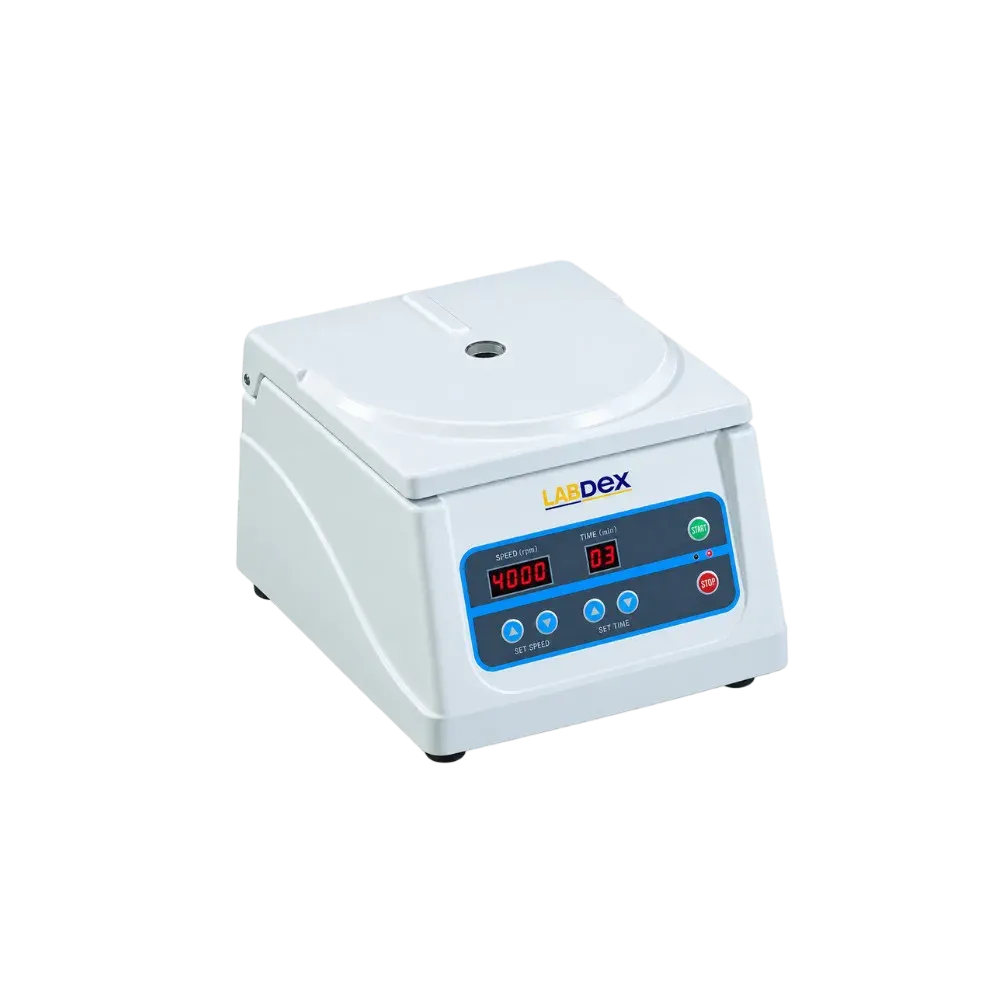
- Maximum speed: 12000 rpm
- Maximum RCF: 14170 x g
- Maximum capacity: 24 Capacity tubes 24 x (0.25 - 1 ml)
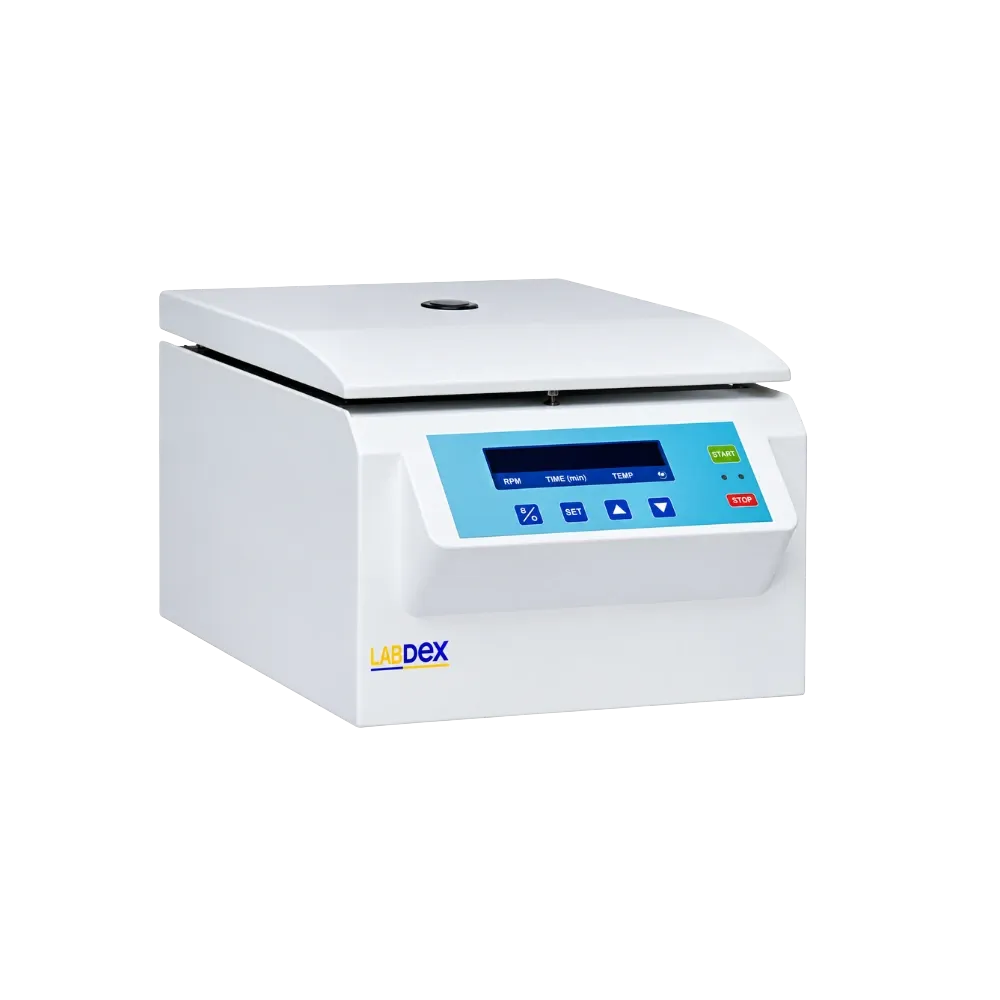
- Maximum speed: 12000 rpm
- Maximum RCF: 15800 x g
- Maximum capacity: 24 pieces capillary vessel

- Maximum speed: 12000 rpm
- Maximum RCF: 18620 x g
- Speed accuracy: ± 20 rpm
Mini Centrifuge
Labdex Mini Centrifuge are compact, benchtop instruments ideal for rapid spin‑downs and small‑volume sample preparation in molecular biology, biochemistry, and clinical labs. With adjustable speed and time control, automatic lid‑lock safety, quiet low‑noise operation, and support for a variety of tube sizes — they deliver fast, dependable micro‑centrifugation in limited bench space, making them perfect for PCR prep, cell pelleting, and routine sample clarification.
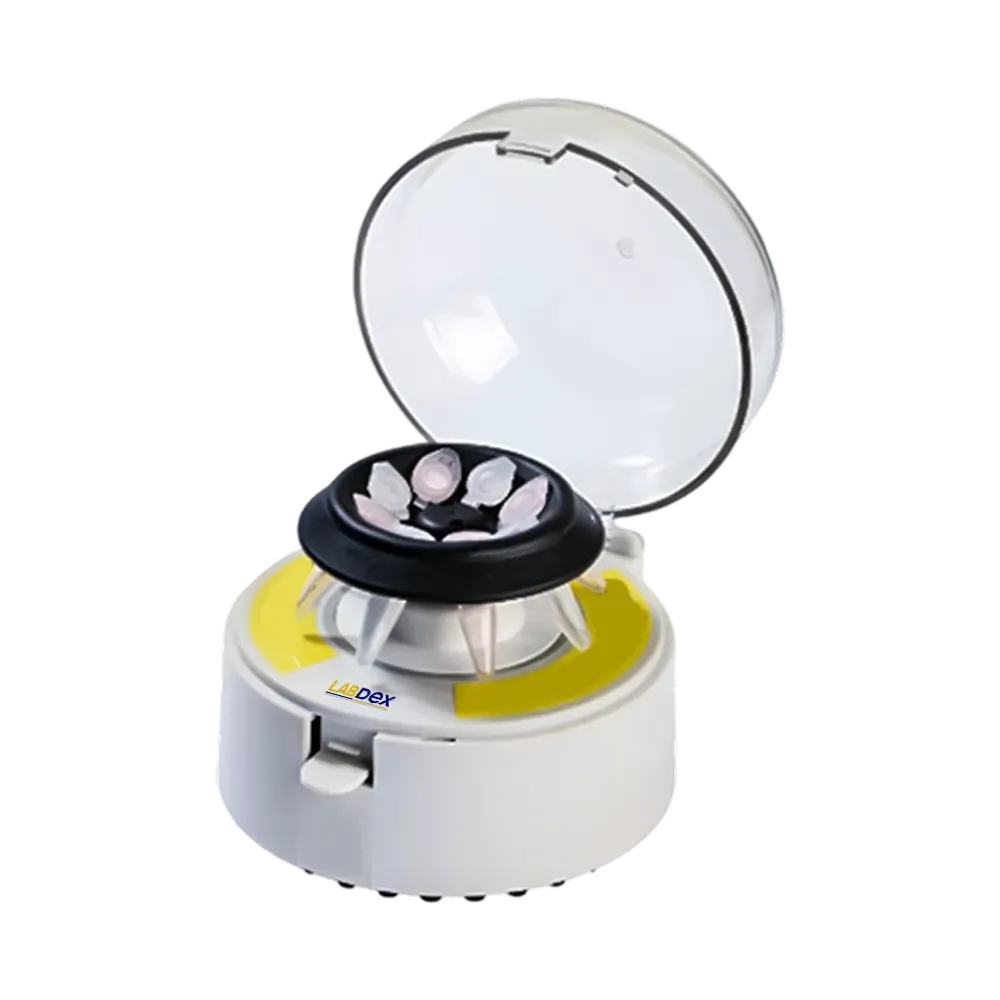
- Speed: 6000 rpm
- Maximum RCF: 2000 x g
- Rotor: 6 x 1.5 ml x 2.0 ml rotor ; 2 x 8 x 0.2 ml strip rotor

- Speed: 4000 & 6000 rpm
- Maximum RCF: 1200 & 2000 x g
- Rotor: 6 x 1.5 ml x 2.0 ml rotor ; 2 x 8 x 0.2 ml strip rotor
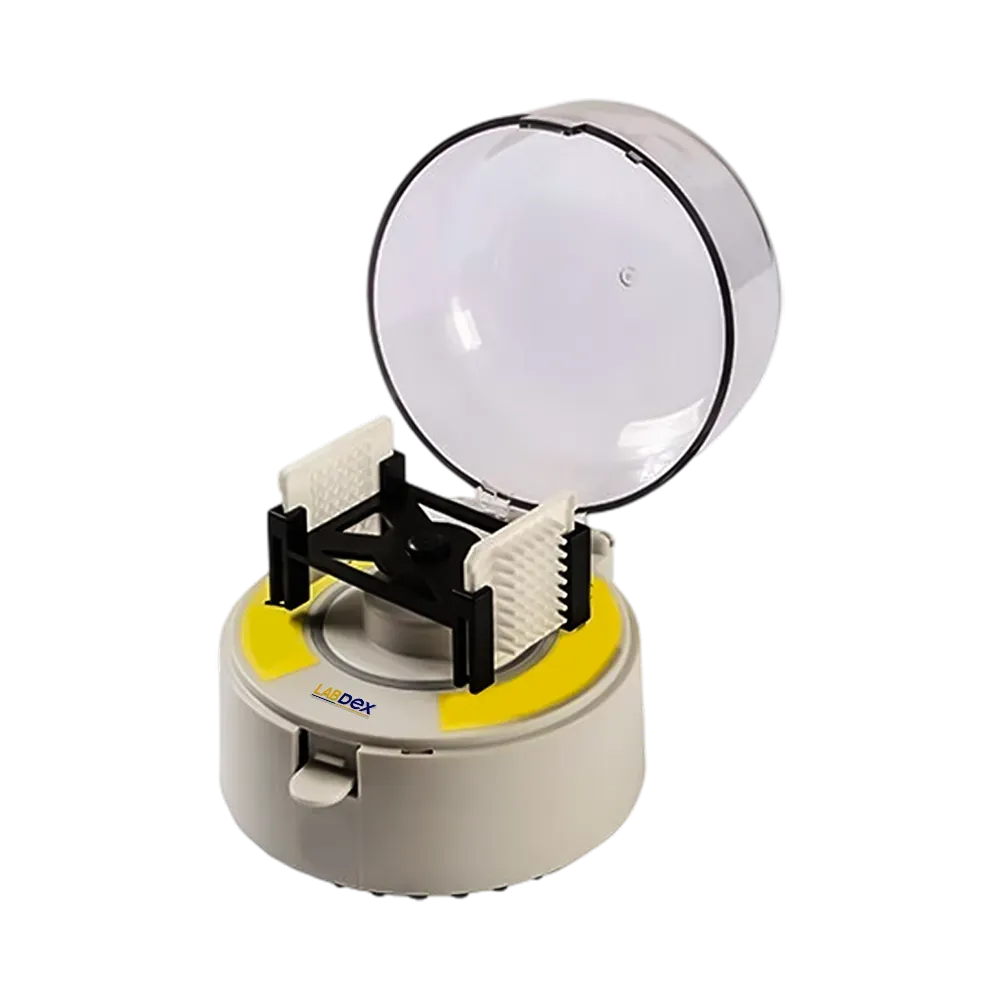
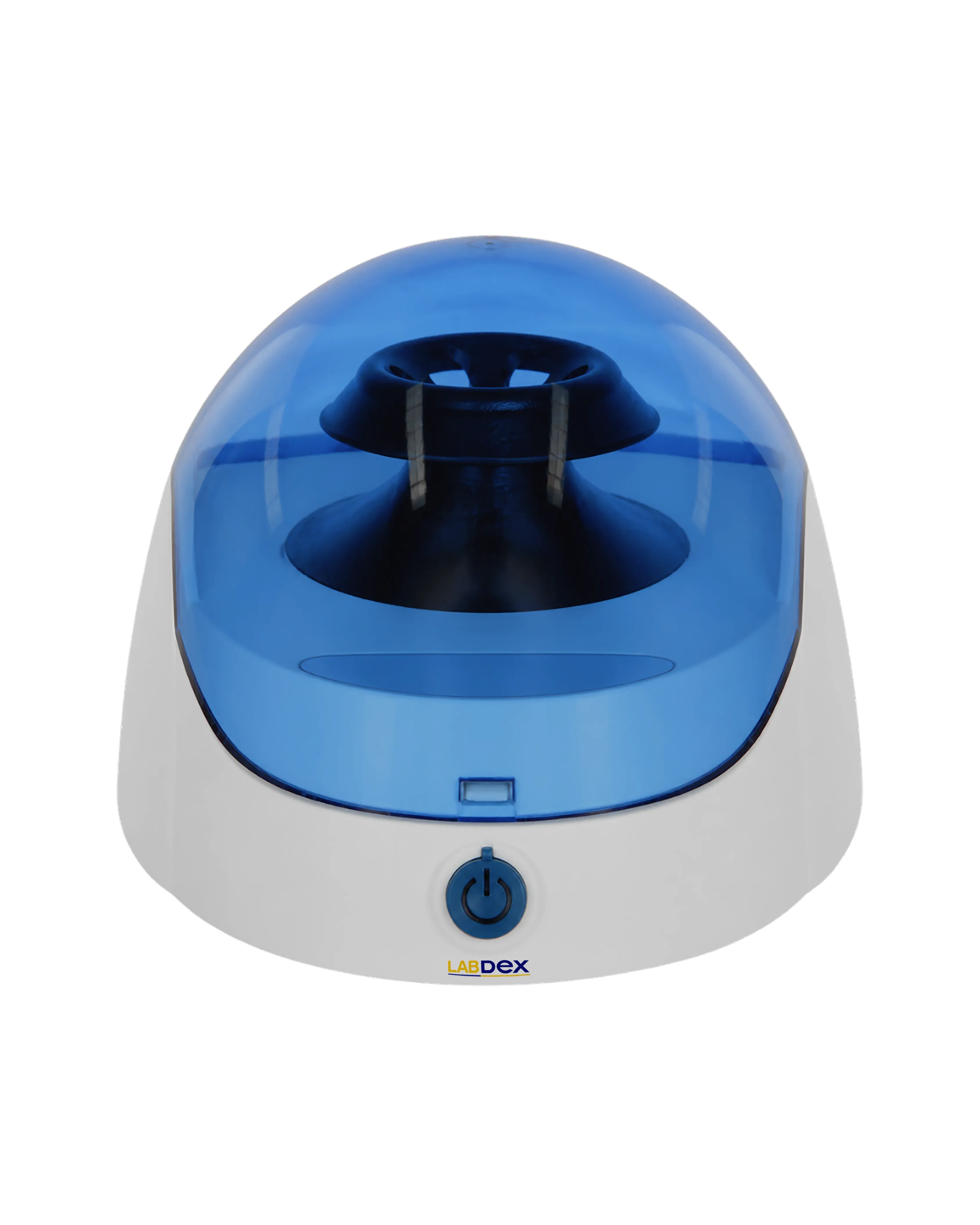
- Speed: 6000 rpm
- Maximum RCF: 2000 x g
- Rotor: 6 x 1.5 mL/2.0 mL rotor <br/> 2 x 8 x 0.2 mL strip rotor
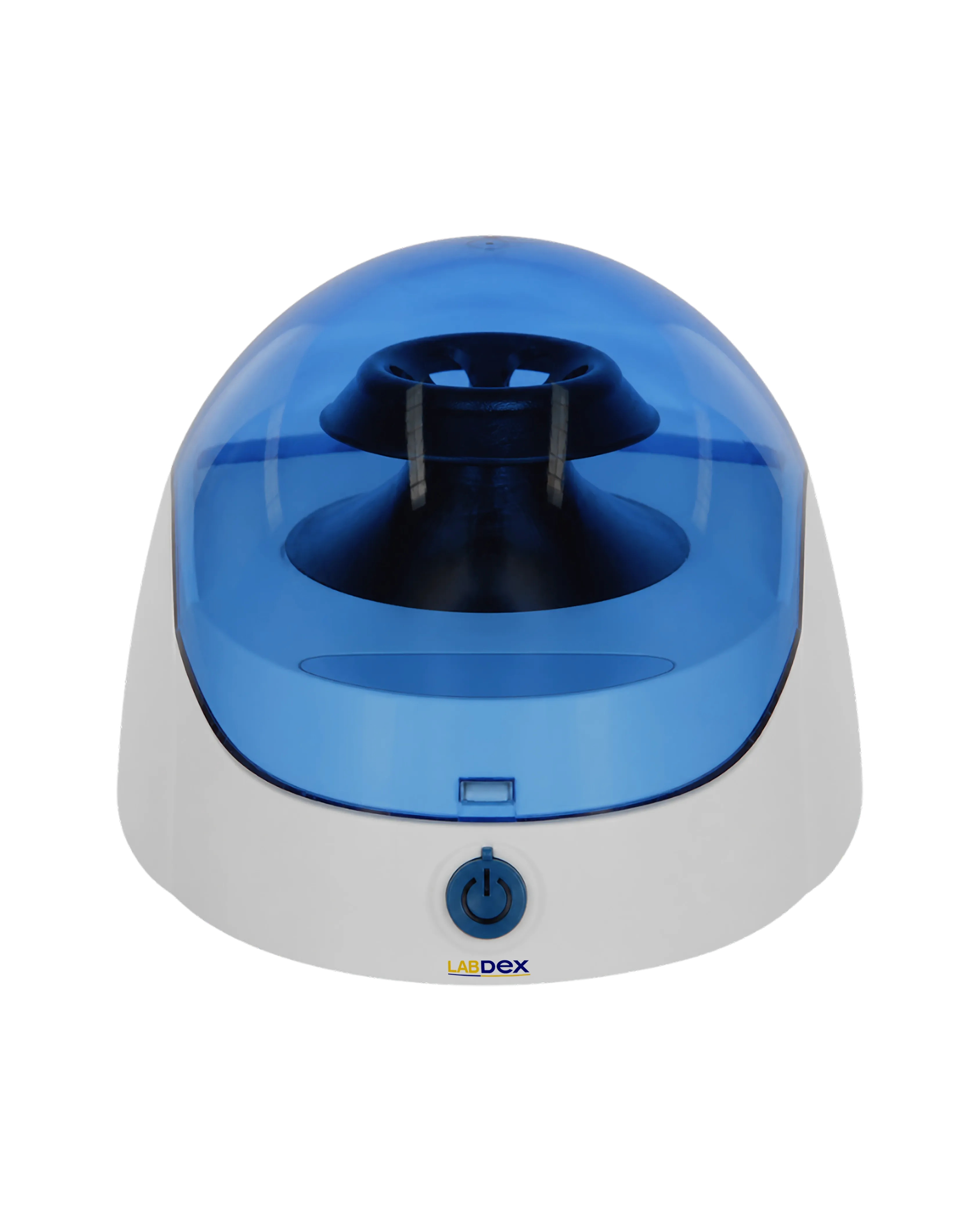
- Speed: 7000 rpm
- Maximum RCF: 2300 x g
- Rotor: 6 x 1.5 ml / 2.0 ml tubes, 6 x 0.5 ml tubes and 2-8 x 0.2 ml PCR strip tubes
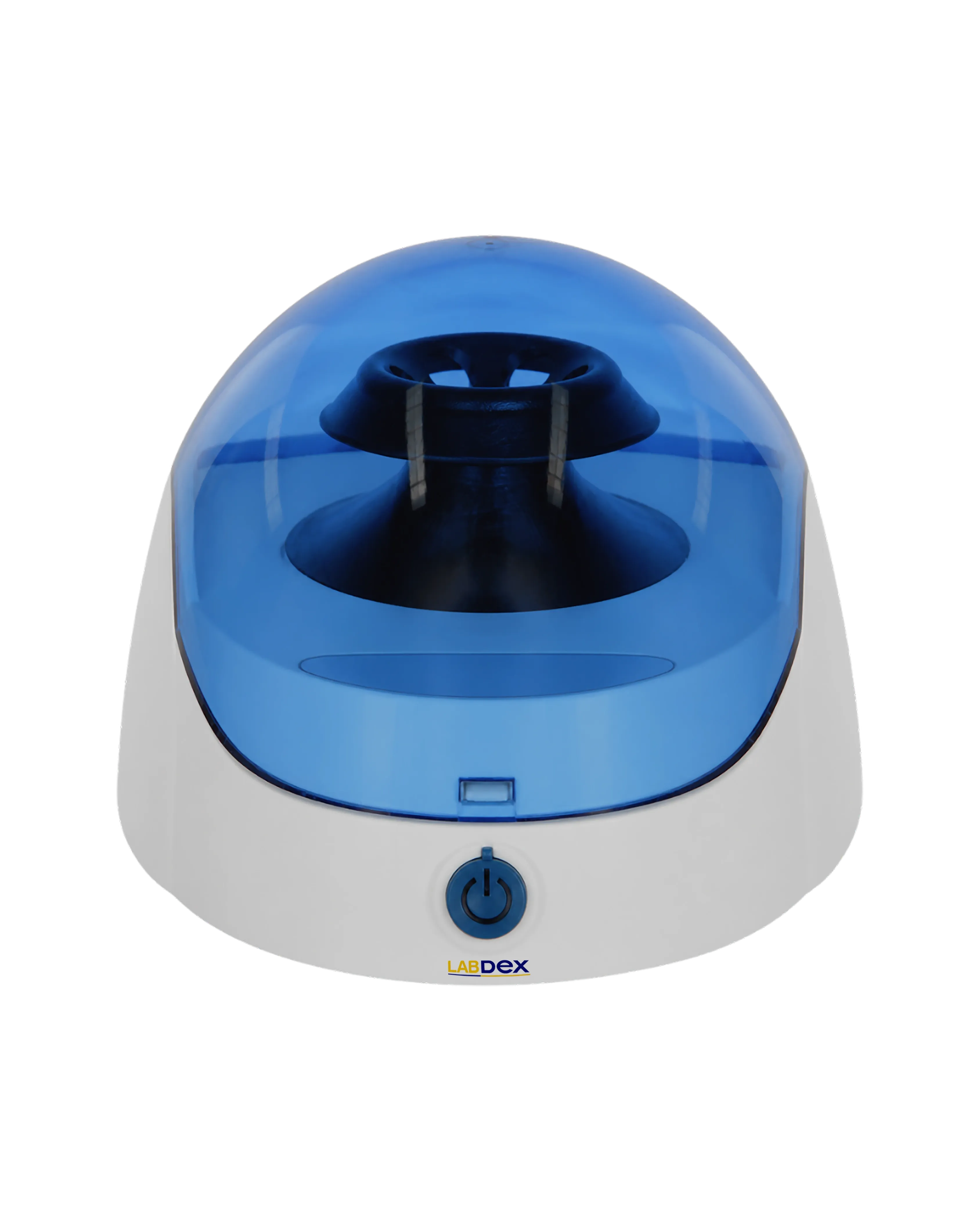
- Speed: 10000 rpm
- Maximum RCF: 5000 x g
- Rotor: 48 well 50 µl PCR rotor or 5 x 5 ml tube rotor

- Maximum speed: 4000 rpm
- Maximum RCF: 900 x g
- Sample-handling capacity: 6 x 1.5 ml <hr> 6 x 0.5 ml <hr> 6 x 0.2 ml <hr> 2 x 8 x 0.2 ml

- Maximum speed: 5400 rpm
- Maximum RCF ( Round rotor ): 2000 x g
- Speed accuracy: 5400 rpm (Fixed)
Mini Plate Centrifuge
We at Labex offers series of Mini Plate Centrifuges with a speed range of 2500 rpm maximum. It is widely used in molecular laboratory before and after thermal cycling to improve PCR yield.

- Maximum rotational speed: 2200 rpm
- Maximum RCF: 480 x g
- Capacity: 2 x PCR plate / Elisa plate <br/> 24 x PCR Strip tube <br/> 192 x 0.2 mL PCR strip tube
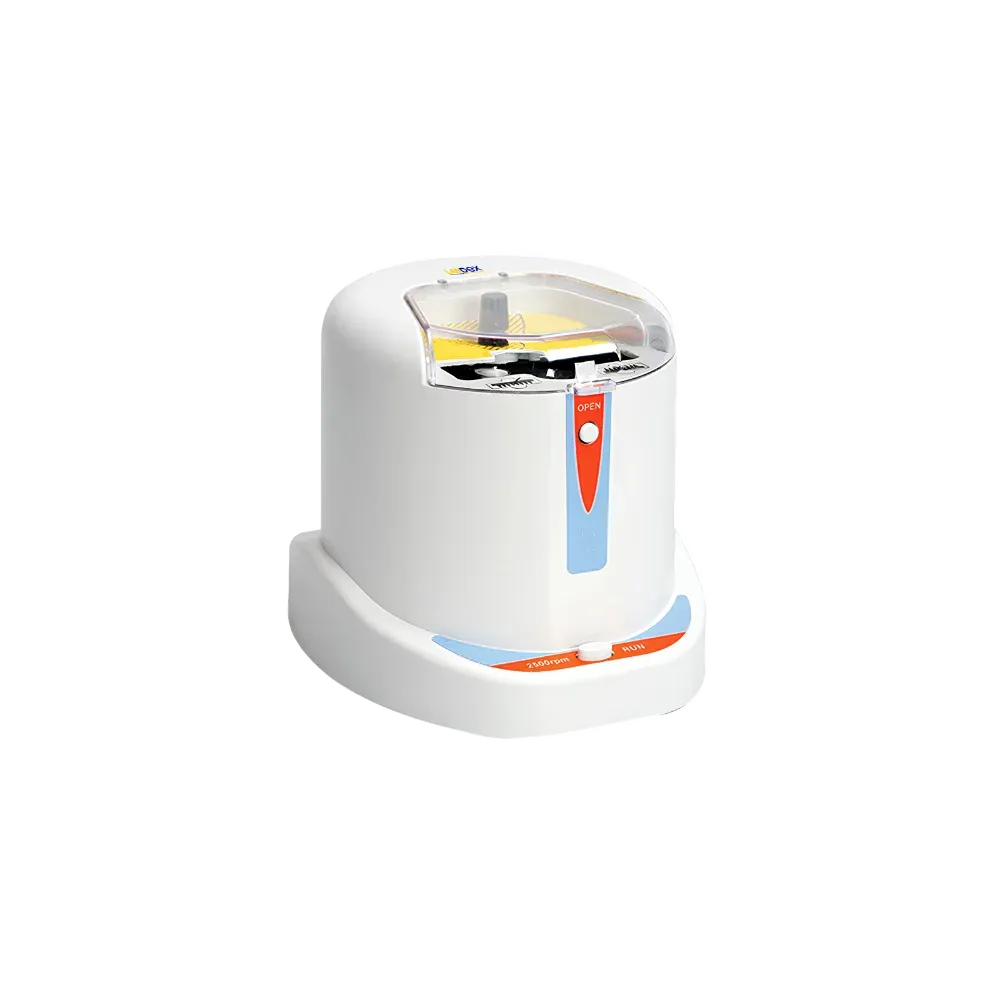
- Maximum rotational speed: 2500 rpm
- Maximum RCF: 500 x g
- Capacity: 2 pcs PCR plates

- Maximum speed: 300 – 3000 ±15 rpm
- Maximum RCF: 608 x g
- Maximum capacity: 2 x 96 hole PCR plate / enzyme label plate
Automatic Decapping Centrifuge
Labdex Automatic Decapping Centrifuge deliver fast, hands-free tube decapping with precise and reliable centrifugation performance. Engineered for high-throughput laboratories, they feature programmable speed and time, automatic imbalance detection, digital display, corrosion-resistant rotors, and safety lid-lock mechanisms. These advanced features enhance workflow efficiency, minimize contamination risks, and support consistent sample processing across clinical, research, and industrial applications.

- Maximum speed: 4000 rpm
- Maximum RCF: 3030 x g
- Maximum capacity: 64 tube (ɸ13x75/100mm tubes)

- Maximum speed: 4000 rpm
- Maximum RCF: 3030 x g
- Maximum capacity: 80 tube (ɸ13x75/100mm tubes)

- Maximum speed: 4000 rpm
- Maximum RCF: 3850 x g
- Maximum capacity: 150 tube (ɸ13x75/100mm tubes)
Blood Bank Tube Centrifuge
Labdex Blood Bank Tube Centrifuge provide precise, stable, and high-speed separation for serology and blood component processing. They feature adjustable speed and time, programmable run cycles, automatic imbalance detection, safety lid-lock, and corrosion-resistant rotors. Designed for reliable performance in demanding laboratory environments, they enhance workflow accuracy, support critical diagnostic procedures, and ensure consistent results across blood bank and clinical applications.

- Maximum speed: 5000 rpm
- Maximum RCF: 3555 x g
- Maximum capacity: 12 x 15 ml