
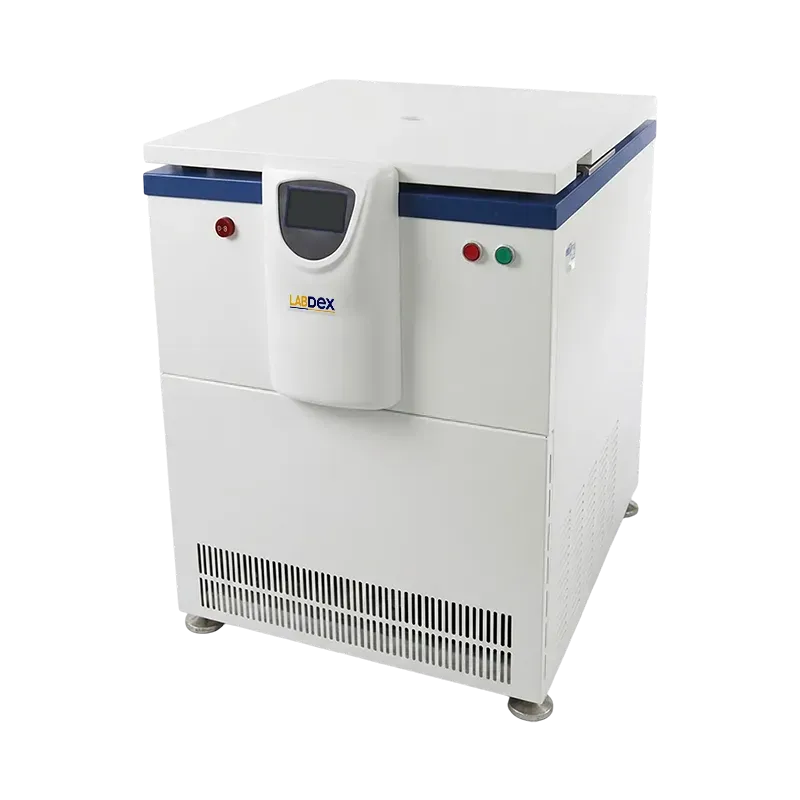
Soil Water Retention Centrifuge LX100SRC is designed to determine soil pF-curves by measuring soil suction, volume-weight and gravimetric water content. It offers a wide measurable suction range with faster and easier operation than conventional pressure membrane methods. Equipped with a high-torque variable-frequency AC motor and microcomputer control system, it ensures efficient operation. Suitable for soil water dynamics, hydrology, climatology and agricultural research.
| Maximum speed | 10000 rpm |
|---|---|
| Maximum RCF | 14758 x g |
| Maximum capacity | 4 x 100 ml |
| Speed accuracy | ± 30 rpm (customizable, multiples of 10) |
| Timer range | 1 min to 99 h 59 min 59 sec |
| Temperature setting range | - 20°C to + 40°C |
| Temperature accuracy | ± 1°C |
| Compressor | Fluorine-free refrigeration compressor unit (R404a) |
| Noise | ≤ 65 dB (A) |
| Samples | 4 Per time |
| Number of running programs | 16 |
| Measurement range | pF 2.0 - 4.2 (0.1 bar - 15 bar) |
| Container dimension | Φ 50 x 51 mm |
| Power | 4.0 Kw |
| Power supply | AC 220 V/ 50 Hz/ 30 A |
| Dimension (L x W x H) | 710 x 910 x 950 mm |
| Net weight | 240 Kg |
| Packing dimension (W x D x H) | Main unit: 1060 x 850 x 1160 mm Rotor box: 590 x 300 x 390 mm |
| Gross weight | 380 Kg |
Microcomputer-controlled operation
Electronic interlock safety
LCD Touch screen display
Wide measurable suction range
High-torque variable-frequency AC motor
Determines soil pF-curves based on soil suction, volume-weight and gravimetric water content
Faster and easier operation than conventional pressure membrane methods
Features an environmentally friendly refrigerant R404a
Automatic troubleshooting with indication of error code and alarm on the screen
Used for soil water retention analysis and soil moisture dynamics studies. Suitable for hydrology, meteorology, climatology and agricultural research.
| Rotor name | Maximum speed (rpm) | Maximum capacity (ml) | Maximum RCF (xg) |
| Soil dehydrating rotor | 10000 | 4 x 100 | 14758 |
Mini Centrifuge
Labdex Mini Centrifuge are compact, benchtop instruments ideal for rapid spin‑downs and small‑volume sample preparation in molecular biology, biochemistry, and clinical labs. With adjustable speed and time control, automatic lid‑lock safety, quiet low‑noise operation, and support for a variety of tube sizes — they deliver fast, dependable micro‑centrifugation in limited bench space, making them perfect for PCR prep, cell pelleting, and routine sample clarification.
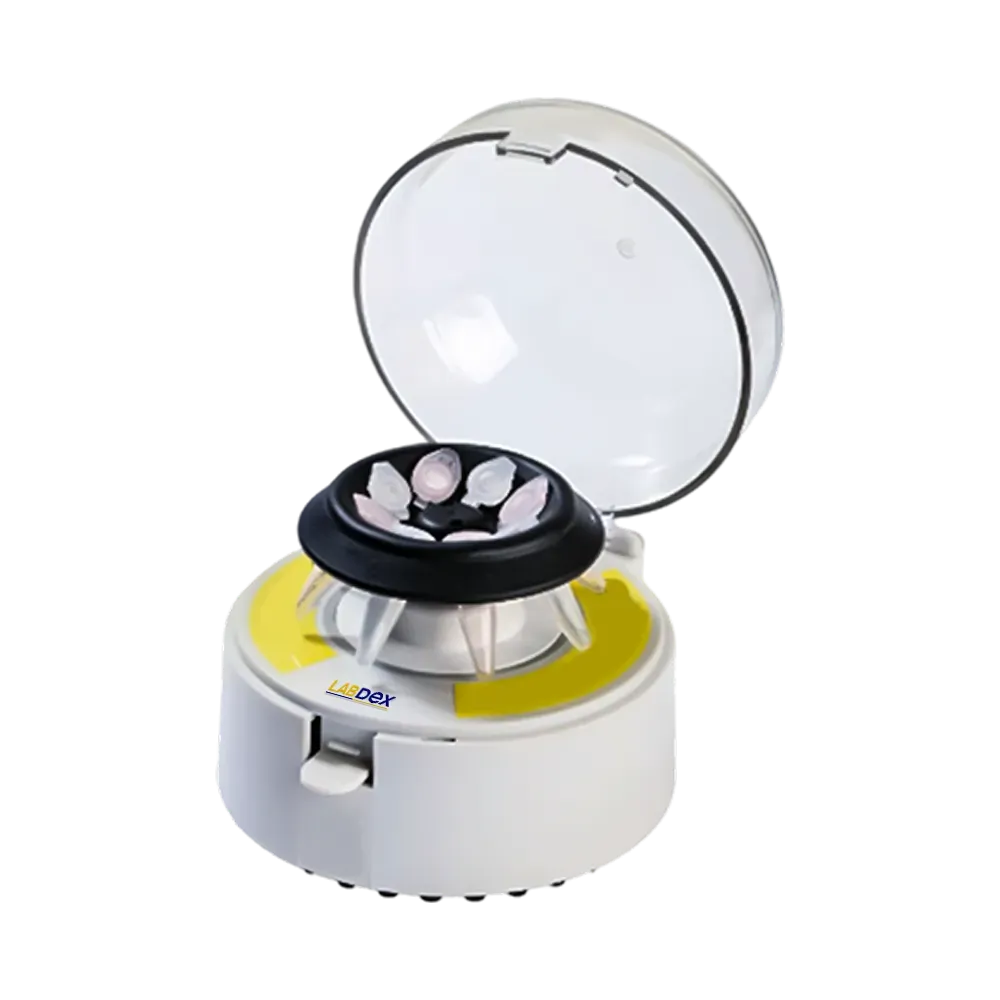
- Speed: 6000 rpm
- Maximum RCF: 2000 x g
- Rotor: 6 x 1.5 ml x 2.0 ml rotor ; 2 x 8 x 0.2 ml strip rotor

- Speed: 4000 & 6000 rpm
- Maximum RCF: 1200 & 2000 x g
- Rotor: 6 x 1.5 ml x 2.0 ml rotor ; 2 x 8 x 0.2 ml strip rotor
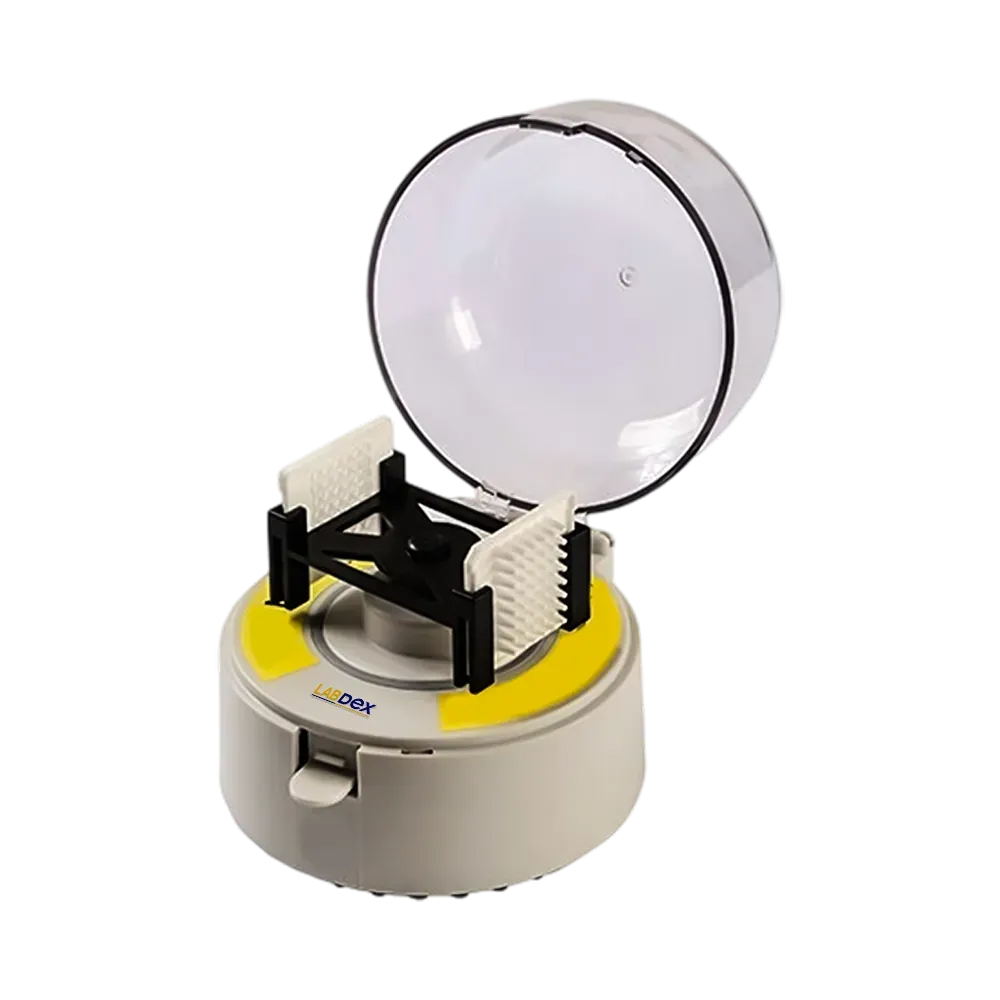
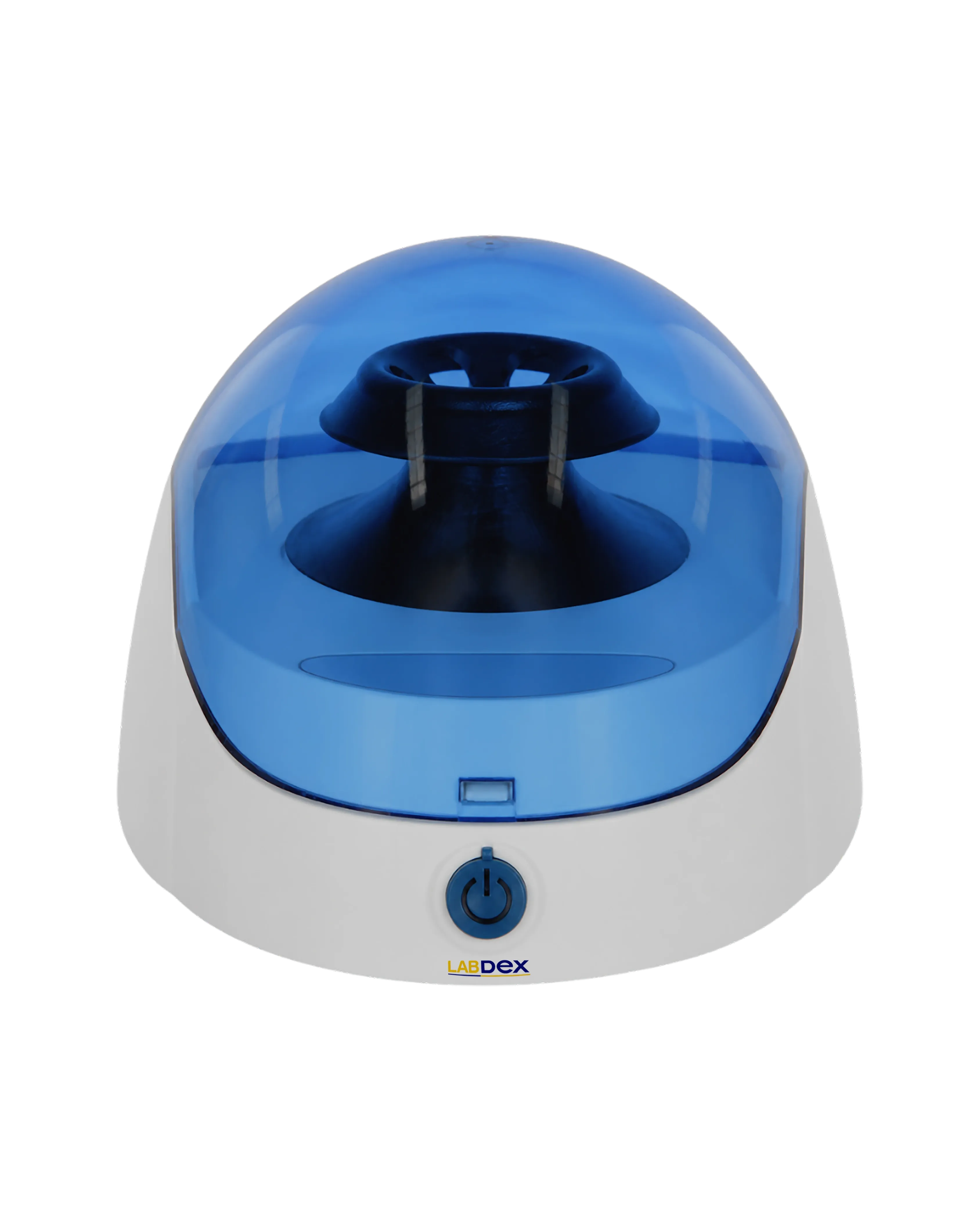
- Speed: 6000 rpm
- Maximum RCF: 2000 x g
- Rotor: 6 x 1.5 mL/2.0 mL rotor <br/> 2 x 8 x 0.2 mL strip rotor
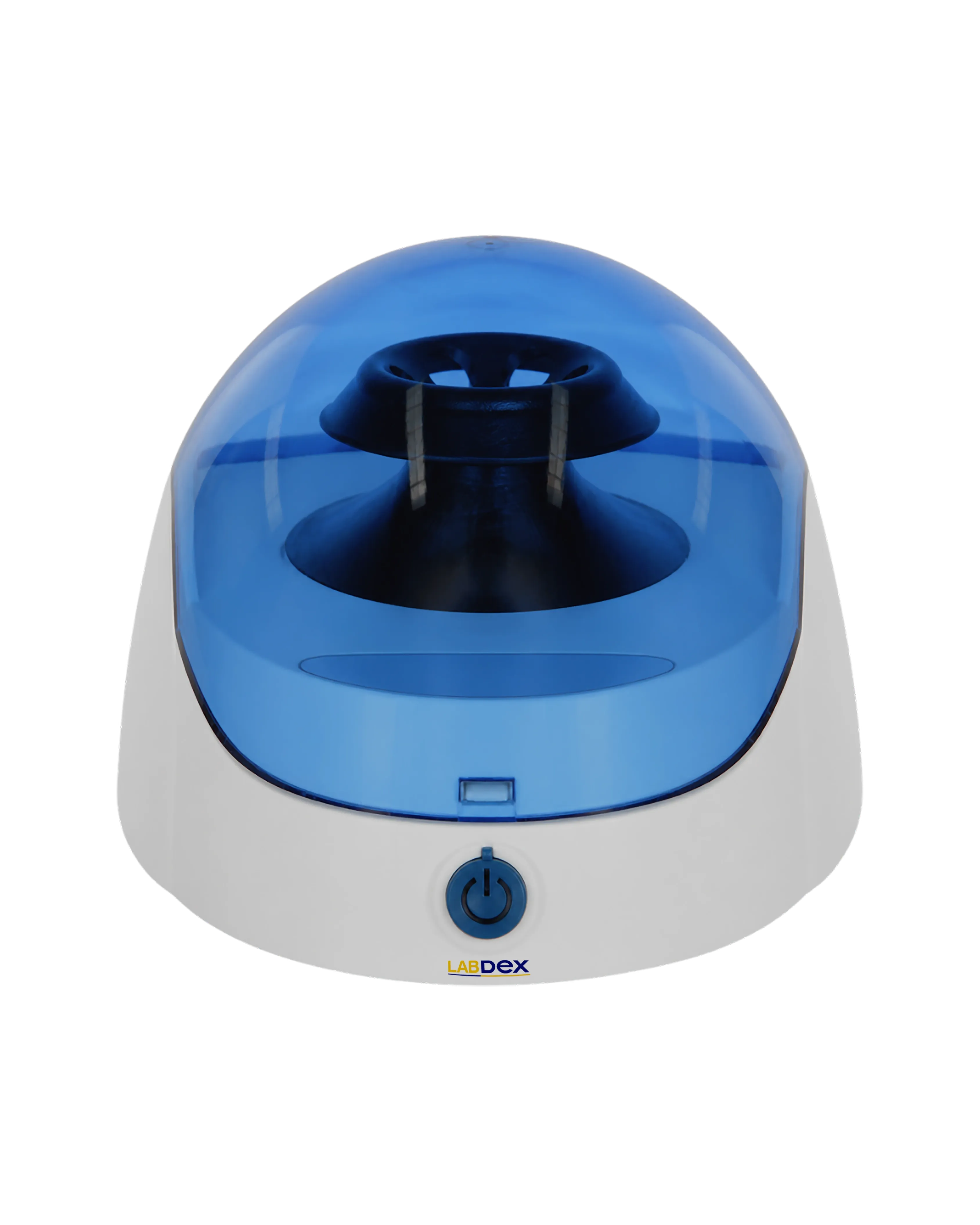
- Speed: 7000 rpm
- Maximum RCF: 2300 x g
- Rotor: 6 x 1.5 ml / 2.0 ml tubes, 6 x 0.5 ml tubes and 2-8 x 0.2 ml PCR strip tubes
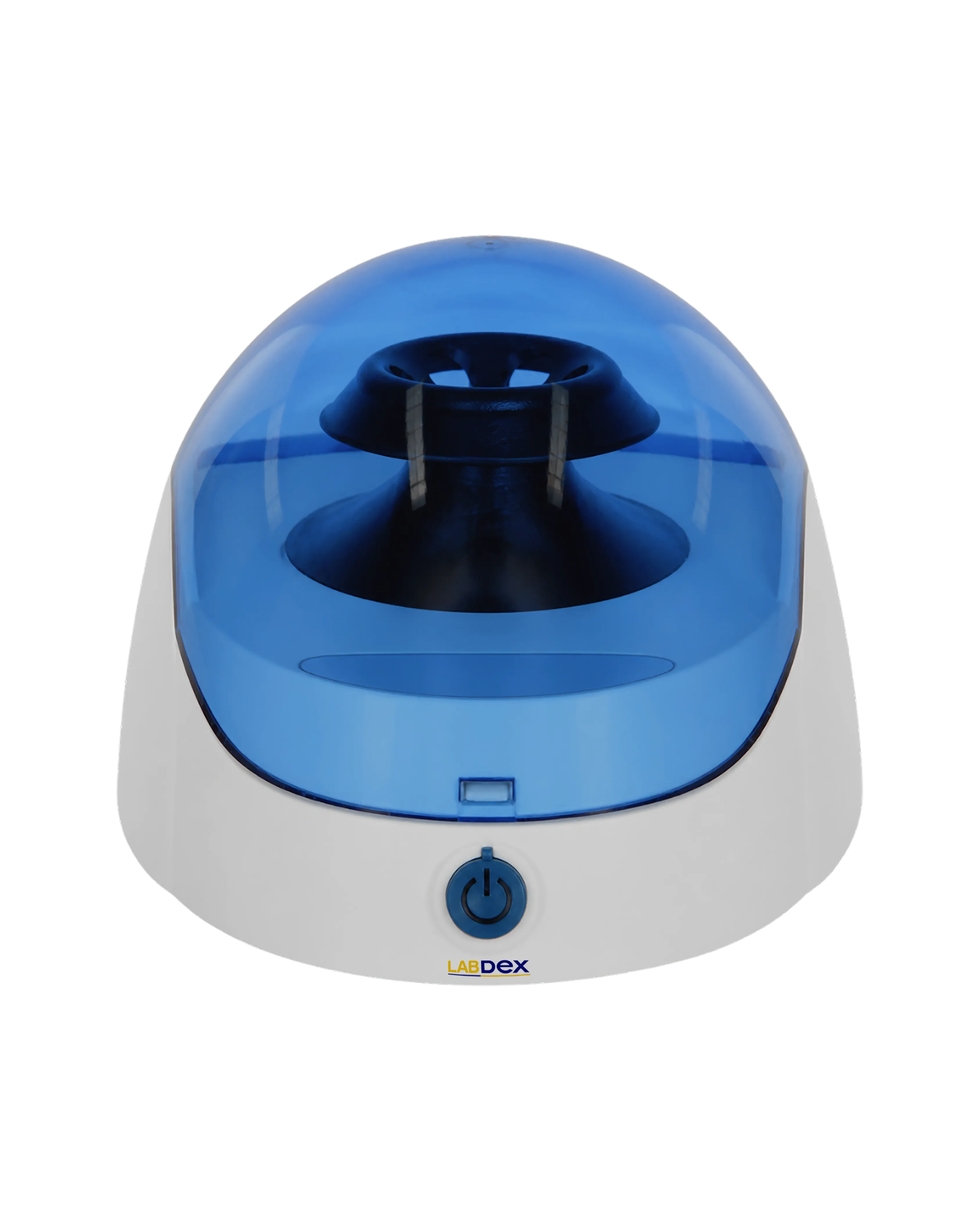
- Speed: 10000 rpm
- Maximum RCF: 5000 x g
- Rotor: 48 well 50 µl PCR rotor or 5 x 5 ml tube rotor

- Maximum speed: 4000 rpm
- Maximum RCF: 900 x g
- Sample-handling capacity: 6 x 1.5 ml <hr> 6 x 0.5 ml <hr> 6 x 0.2 ml <hr> 2 x 8 x 0.2 ml

- Maximum speed: 5400 rpm
- Maximum RCF ( Round rotor ): 2000 x g
- Speed accuracy: 5400 rpm (Fixed)
Mini Plate Centrifuge
We at Labex offers series of Mini Plate Centrifuges with a speed range of 2500 rpm maximum. It is widely used in molecular laboratory before and after thermal cycling to improve PCR yield.

- Maximum rotational speed: 2200 rpm
- Maximum RCF: 480 x g
- Capacity: 2 x PCR plate / Elisa plate <br/> 24 x PCR Strip tube <br/> 192 x 0.2 mL PCR strip tube
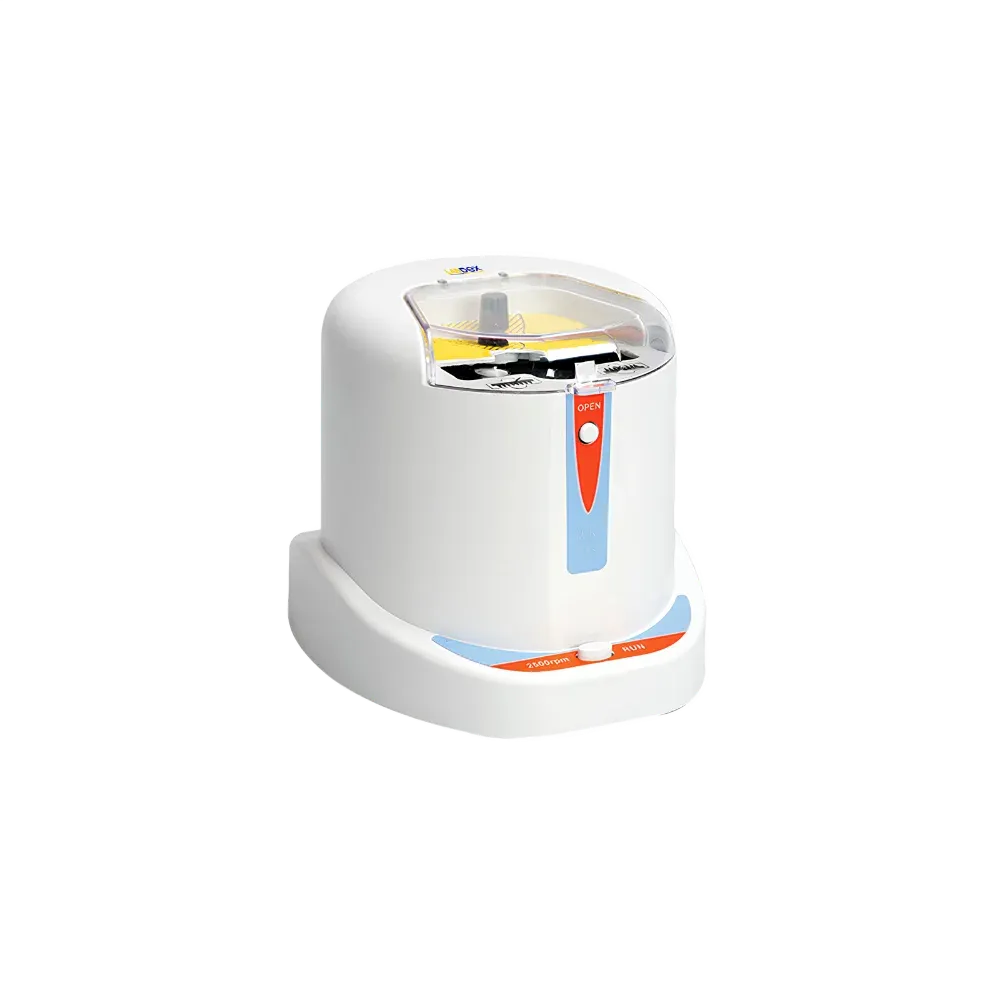
- Maximum rotational speed: 2500 rpm
- Maximum RCF: 500 x g
- Capacity: 2 pcs PCR plates

- Maximum speed: 300 – 3000 ±15 rpm
- Maximum RCF: 608 x g
- Maximum capacity: 2 x 96 hole PCR plate / enzyme label plate
Automatic Decapping Centrifuge
Labdex Automatic Decapping Centrifuge deliver fast, hands-free tube decapping with precise and reliable centrifugation performance. Engineered for high-throughput laboratories, they feature programmable speed and time, automatic imbalance detection, digital display, corrosion-resistant rotors, and safety lid-lock mechanisms. These advanced features enhance workflow efficiency, minimize contamination risks, and support consistent sample processing across clinical, research, and industrial applications.

- Maximum speed: 4000 rpm
- Maximum RCF: 3030 x g
- Maximum capacity: 64 tube (ɸ13x75/100mm tubes)

- Maximum speed: 4000 rpm
- Maximum RCF: 3030 x g
- Maximum capacity: 80 tube (ɸ13x75/100mm tubes)

- Maximum speed: 4000 rpm
- Maximum RCF: 3850 x g
- Maximum capacity: 150 tube (ɸ13x75/100mm tubes)
Blood Bank Tube Centrifuge
Labdex Blood Bank Tube Centrifuge provide precise, stable, and high-speed separation for serology and blood component processing. They feature adjustable speed and time, programmable run cycles, automatic imbalance detection, safety lid-lock, and corrosion-resistant rotors. Designed for reliable performance in demanding laboratory environments, they enhance workflow accuracy, support critical diagnostic procedures, and ensure consistent results across blood bank and clinical applications.

- Maximum speed: 5000 rpm
- Maximum RCF: 3555 x g
- Maximum capacity: 12 x 15 ml
Blood ID Centrifuge
Labdex Blood ID Centrifuge deliver precise separation for blood grouping, crossmatching, and serological testing. They feature adjustable speed and time settings, programmable run cycles, automatic imbalance detection, safety lid-lock, and corrosion-resistant rotors. Engineered for dependable performance, they ensure uniform sedimentation, enhance diagnostic accuracy, and support efficient workflows in clinical and transfusion laboratories.

- Maximum speed: 2000 rpm
- Centrifugal speed of blood type card: 1790 rpm
- Maximum capacity: 24 Cards

- Maximum speed: 6000 rpm
- Maximum RCF: 4430 × g
- Maximum capacity: 12 Cards / 24 Cards