

Low Speed Refrigerated Centrifuge LX125LSR is a floor standing microcomputer control unit with a speed of 9000 rpm and temperature ranging from -20 ℃ ~ 40 ℃. Allows automated configuration of speed and RCF value with short spin press function for instant centrifugation. Equipped with a digitalized LCD panel for observing and regulating ongoing parameters (speed, time, and temperature).
| Maximum speed | 9000 rpm |
|---|---|
| Maximum RCF | 18610 x g |
| Maximum capacity | 8 x 2000 ml |
| Temperature accuracy | ±1 ℃ |
| Temperature range | -20 ℃~40 ℃ |
| Timer range | 1 s ~ 23 h 59 min |
| Revolutions/min | ±10r/min |
| Noise | ≤65dB (A) |
| Rotor identification | Yes |
| Power | 7500 W |
| Voltage | AC 220±22V 50Hz 50A |
| Dimension | 1060 x 890 x 970 mm |
| Net weight | 540 Kg |
| Packing dimension | 1560 x 1190 x 1270 mm |
| Gross weight | 690 Kg |
Speed - 9000 rpm
Automatically calibrates speed and centrifugal force value
Microprocessor control feature automatically detects rotors and speed limit
Ten Types of Acceleration and Deceleration Control
LCD control panel – viewing and regulating ongoing parameters (speed, time and temperature)
Electronic lid-locking system for user’s safety (over speed protection and imbalance)
Can store 99 groups of programs
The lid opens automatically on completion, preventing overheating of samples
User-friendly interface for convenient simple operation
Variable replaceable rotors for different sample concentrations
It comes with an operation SOP guide map
Used in life science, biochemical, and clinical labs for precipitate separation and serum analysis, in the pharmaceutical industry, etc., and is perfect for DNA, RNA, PCR, or antibody analysis.
| Rotor name | Maximum speed (rpm) | Maximum capacity (ml) | Maximum RCF (xg) |
| Angle rotor 01 | 9000 | 8 x 500 | 14400 |
| Angle rotor 02 | 8000 | 6 x 1000 | 15526 |
| Angle rotor 03 | 8000 | 6 x 1000 (Carbon fibre) | 18610 |
| Swing-out rotor 01 | 4200 | 6 x 2 x 1000 | 5600 |
| Swing-out rotor 02 | 4200 | 6 x 2400 | 5600 |
| Swing-out rotor 03 | 4000 | 8 x 2000 | 5600 |
Low Speed Refrigerated Centrifuge
Labdex Low Speed Refrigerated Centrifuge combine gentle, low‑G centrifugation with precise temperature control — ideal for delicate sample processing in molecular biology, cell culture, and clinical labs. Featuring adjustable low-speed settings, programmable run cycles, refrigeration for temperature-sensitive samples, automatic lid‑lock, and smooth braking, they ensure safe, consistent separation of cells, blood components, and biomolecules while preserving sample integrity under cold conditions.
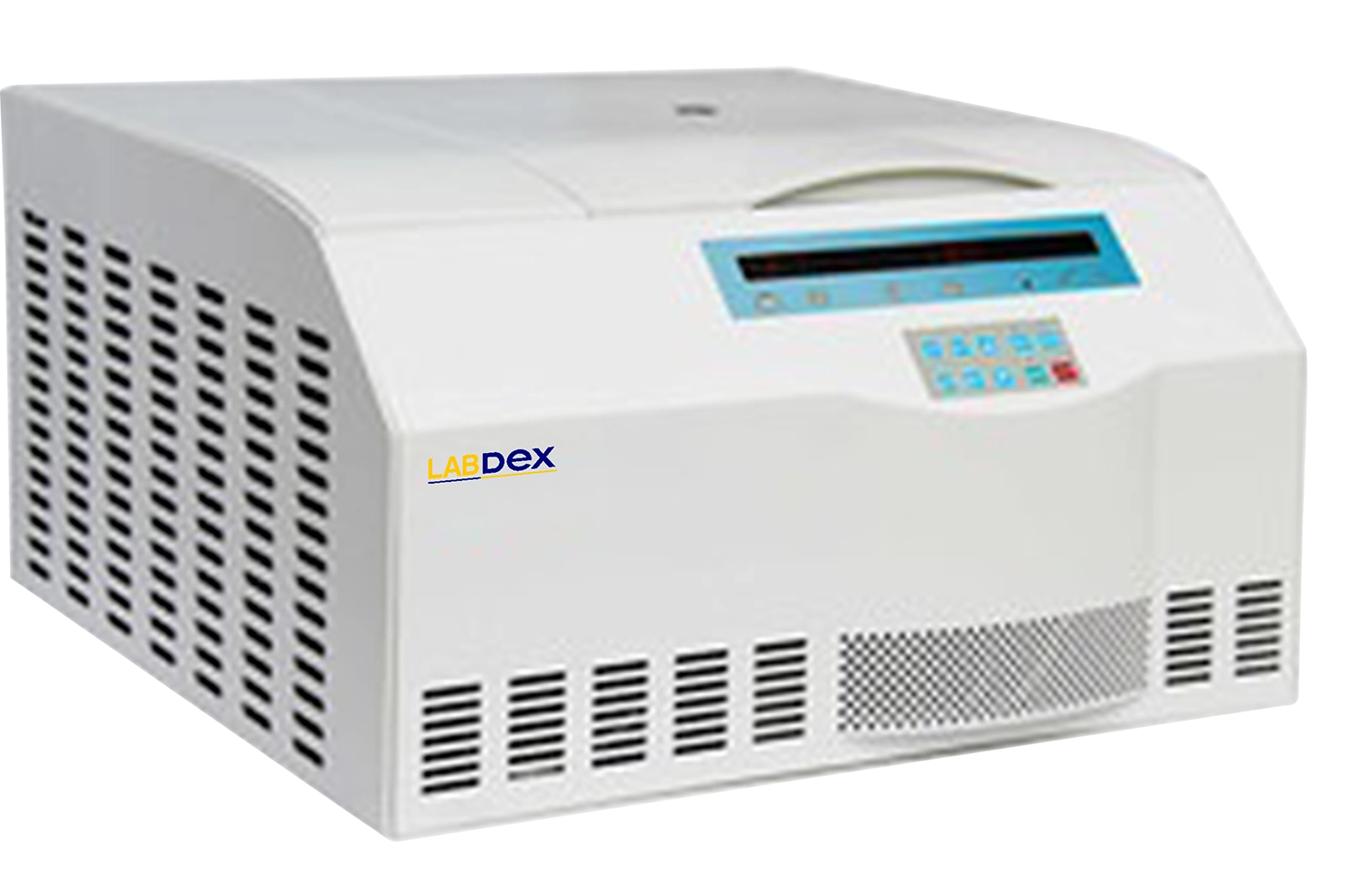
- Maximum speed: 5000 rpm
- Maximum RCF: 4730 x g
- Maximum capacity: 4 x 300 ml
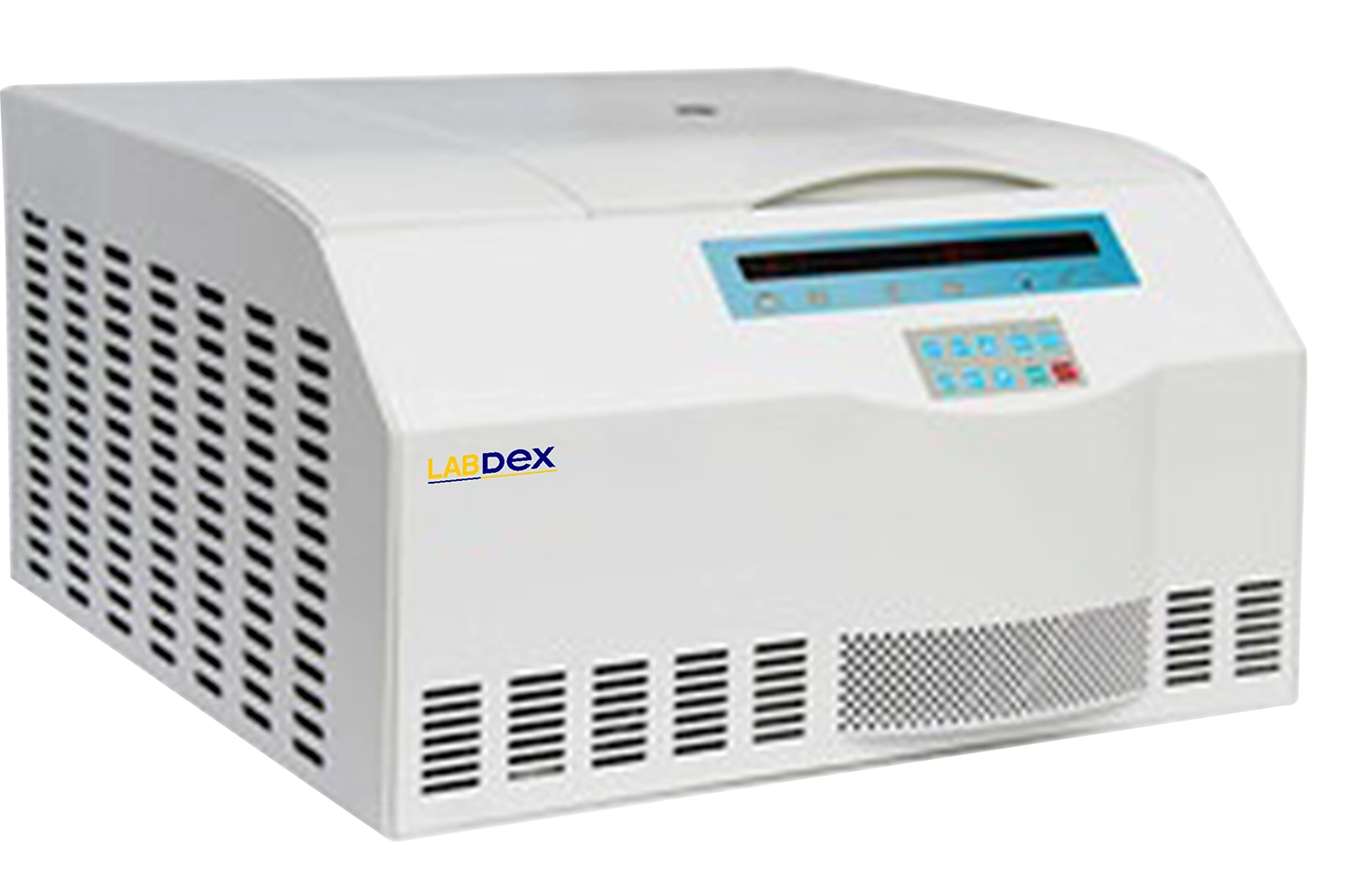
- Maximum speed: 5000 rpm
- Maximum RCF: 4730 x g
- Maximum capacity: 4 x 800 ml

- Maximum speed: 5000 rpm
- Maximum RCF: 6100 x g
- Maximum capacity: 4 x 1000 ml

- Maximum speed: 5300 rpm
- Maximum RCF: 5010 x g
- Maximum capacity: 4 x 250 ml

- Maximum speed: 6000 rpm
- Maximum RCF: 6600 x g
- Maximum capacity: 6 x 1000 ml

- Maximum speed: 6000 rpm
- Maximum RCF: 6600 x g
- Maximum capacity: 4 x 1000 ml

- Maximum speed: 7000 rpm
- Maximum RCF: 11650 x g
- Maximum capacity: 6 x 2400 ml

- Maximum speed: 8000 rpm
- Maximum RCF: 14551 x g
- Maximum capacity: 8 x 2000 ml (16 x 500 ml Blood bag)
Mini Centrifuge
Labdex Mini Centrifuge are compact, benchtop instruments ideal for rapid spin‑downs and small‑volume sample preparation in molecular biology, biochemistry, and clinical labs. With adjustable speed and time control, automatic lid‑lock safety, quiet low‑noise operation, and support for a variety of tube sizes — they deliver fast, dependable micro‑centrifugation in limited bench space, making them perfect for PCR prep, cell pelleting, and routine sample clarification.
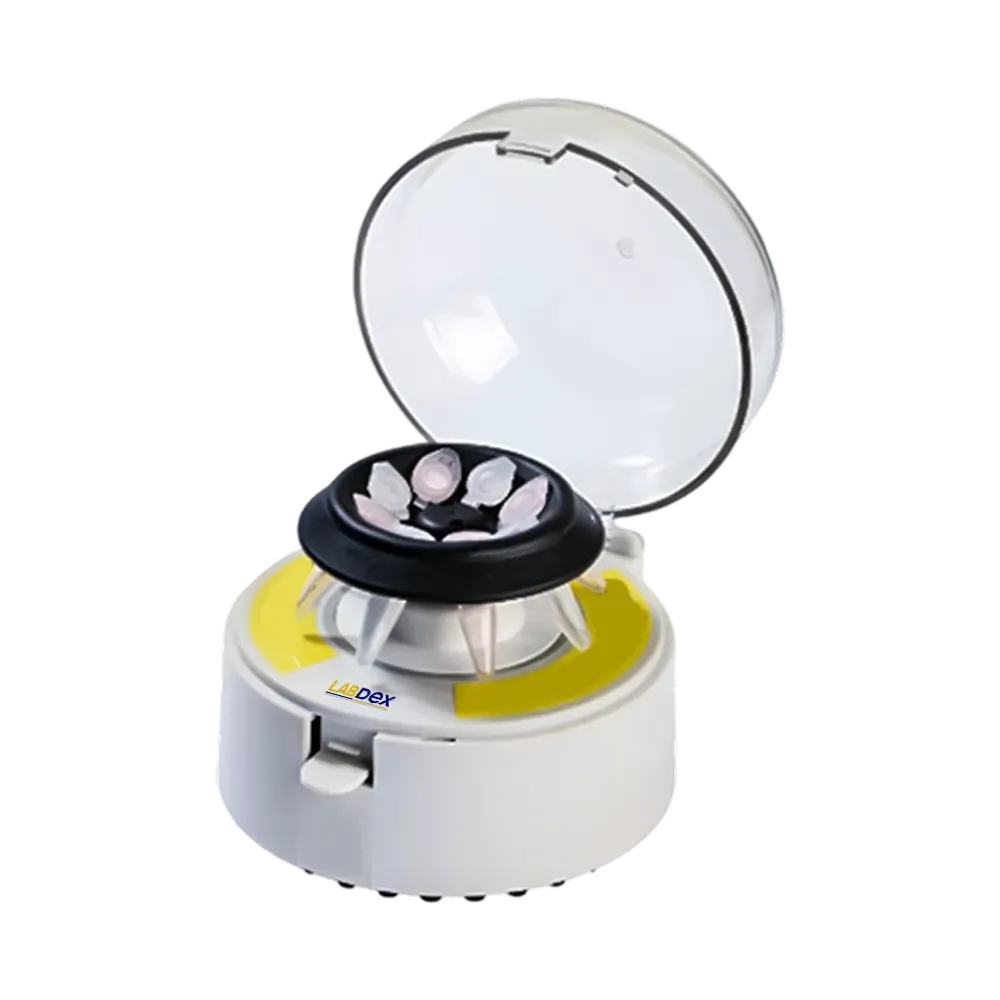
- Speed: 6000 rpm
- Maximum RCF: 2000 x g
- Rotor: 6 x 1.5 ml x 2.0 ml rotor ; 2 x 8 x 0.2 ml strip rotor

- Speed: 4000 & 6000 rpm
- Maximum RCF: 1200 & 2000 x g
- Rotor: 6 x 1.5 ml x 2.0 ml rotor ; 2 x 8 x 0.2 ml strip rotor
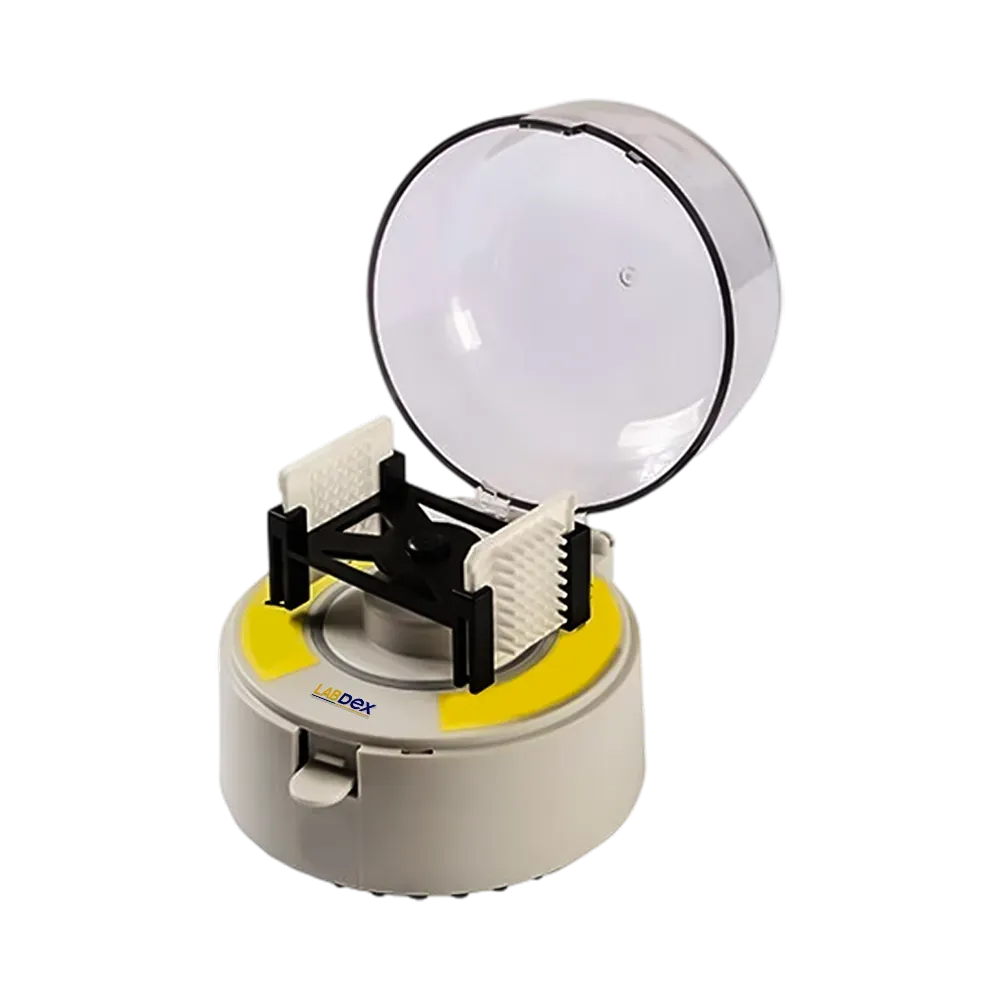
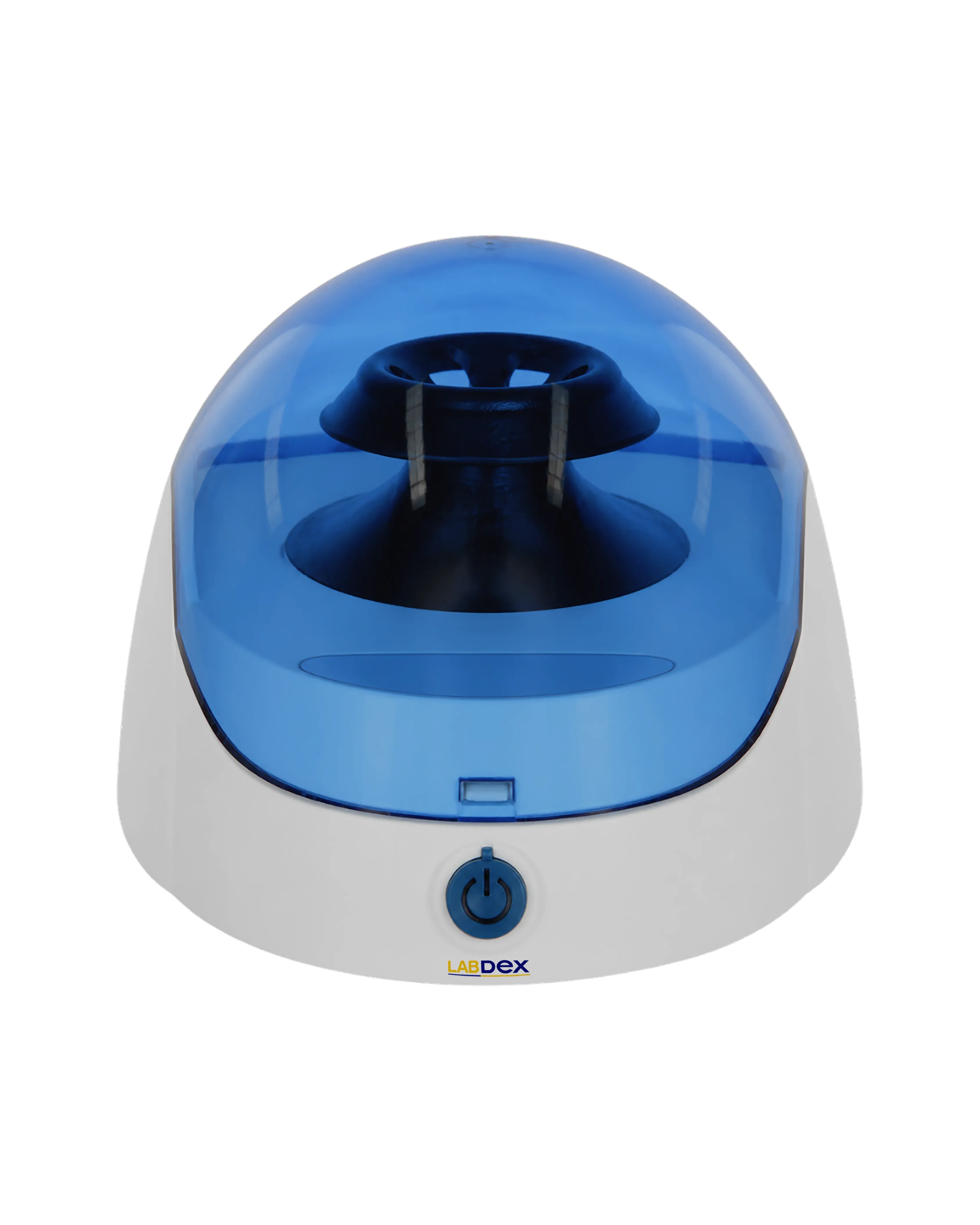
- Speed: 6000 rpm
- Maximum RCF: 2000 x g
- Rotor: 6 x 1.5 mL/2.0 mL rotor <br/> 2 x 8 x 0.2 mL strip rotor
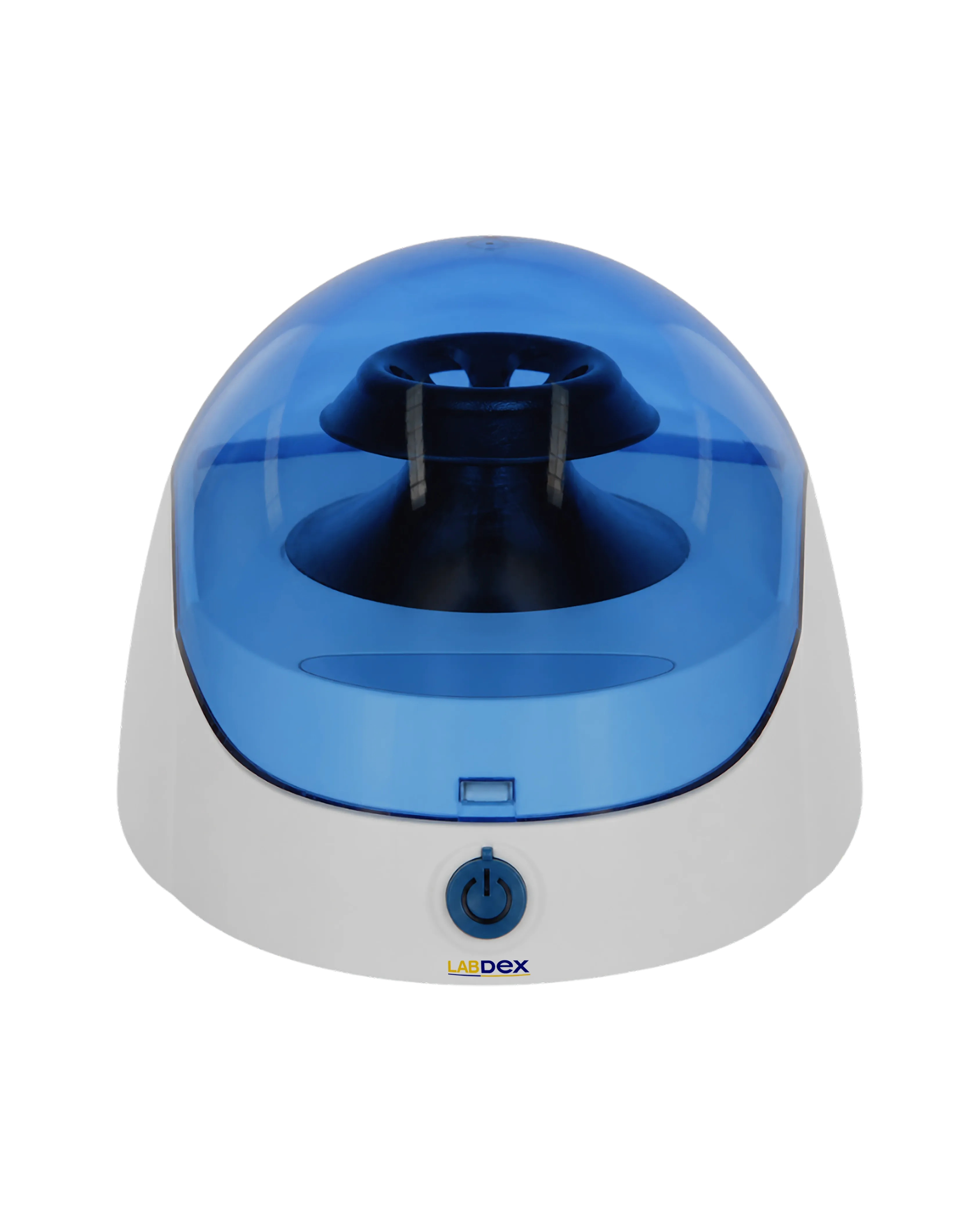
- Speed: 7000 rpm
- Maximum RCF: 2300 x g
- Rotor: 6 x 1.5 ml / 2.0 ml tubes, 6 x 0.5 ml tubes and 2-8 x 0.2 ml PCR strip tubes
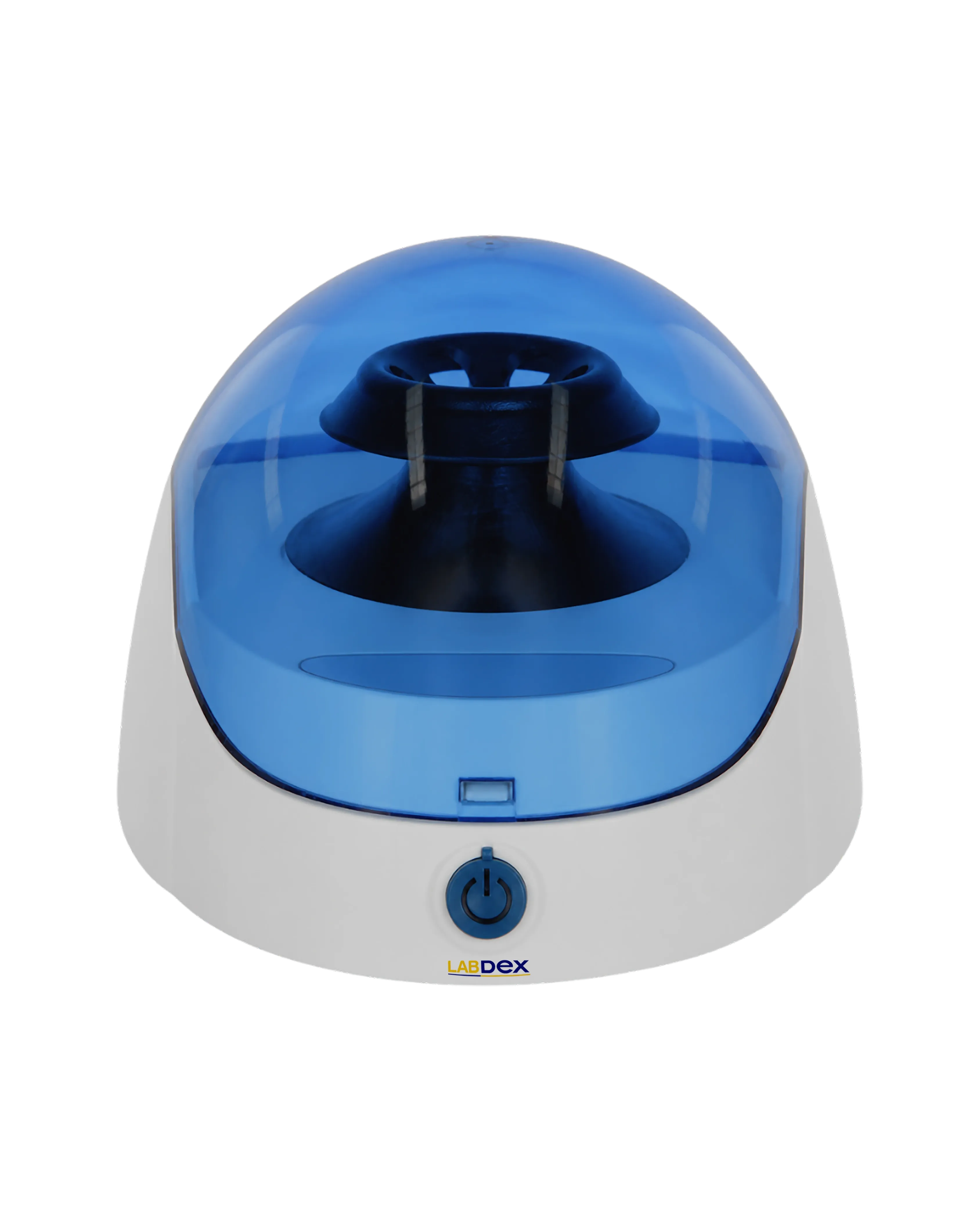
- Speed: 10000 rpm
- Maximum RCF: 5000 x g
- Rotor: 48 well 50 µl PCR rotor or 5 x 5 ml tube rotor

- Maximum speed: 4000 rpm
- Maximum RCF: 900 x g
- Sample-handling capacity: 6 x 1.5 ml <hr> 6 x 0.5 ml <hr> 6 x 0.2 ml <hr> 2 x 8 x 0.2 ml

- Maximum speed: 5400 rpm
- Maximum RCF ( Round rotor ): 2000 x g
- Speed accuracy: 5400 rpm (Fixed)
Mini Plate Centrifuge
We at Labex offers series of Mini Plate Centrifuges with a speed range of 2500 rpm maximum. It is widely used in molecular laboratory before and after thermal cycling to improve PCR yield.

- Maximum rotational speed: 2200 rpm
- Maximum RCF: 480 x g
- Capacity: 2 x PCR plate / Elisa plate <br/> 24 x PCR Strip tube <br/> 192 x 0.2 mL PCR strip tube
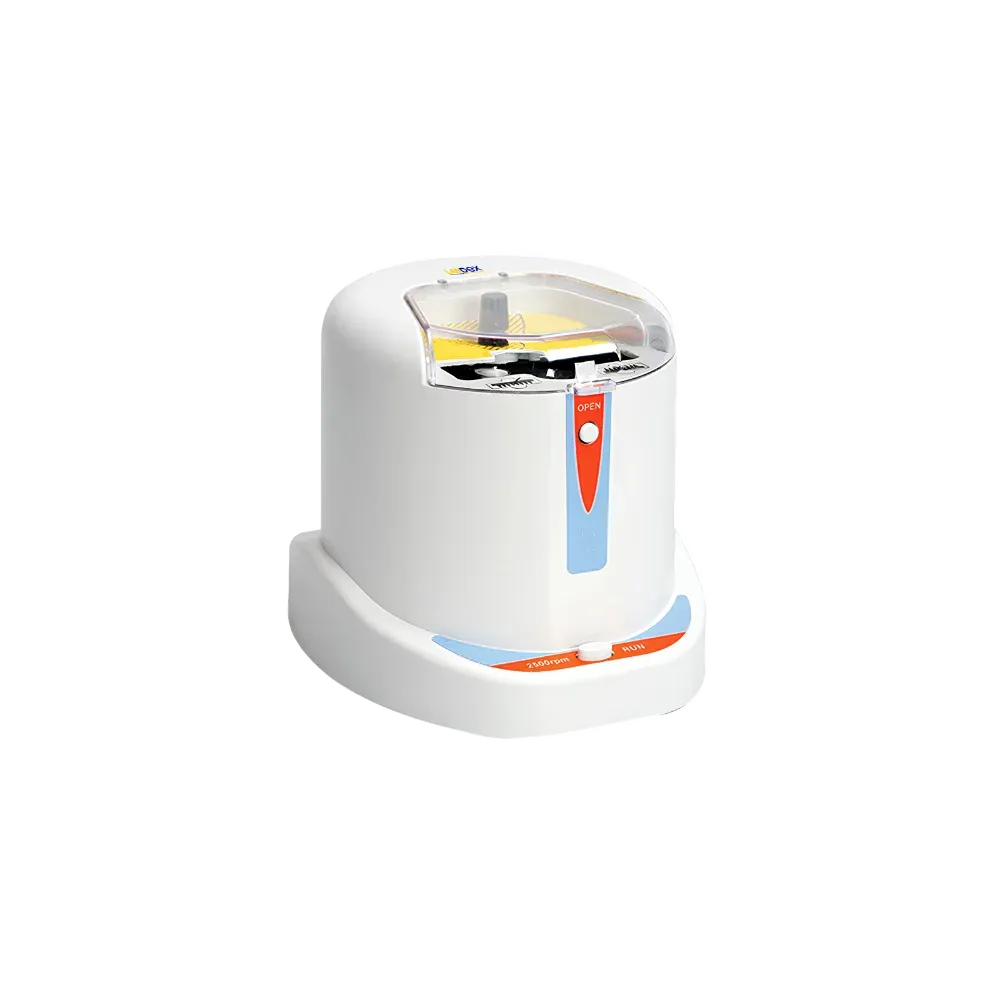
- Maximum rotational speed: 2500 rpm
- Maximum RCF: 500 x g
- Capacity: 2 pcs PCR plates

- Maximum speed: 300 – 3000 ±15 rpm
- Maximum RCF: 608 x g
- Maximum capacity: 2 x 96 hole PCR plate / enzyme label plate
Automatic Decapping Centrifuge
Labdex Automatic Decapping Centrifuge deliver fast, hands-free tube decapping with precise and reliable centrifugation performance. Engineered for high-throughput laboratories, they feature programmable speed and time, automatic imbalance detection, digital display, corrosion-resistant rotors, and safety lid-lock mechanisms. These advanced features enhance workflow efficiency, minimize contamination risks, and support consistent sample processing across clinical, research, and industrial applications.

- Maximum speed: 4000 rpm
- Maximum RCF: 3030 x g
- Maximum capacity: 64 tube (ɸ13x75/100mm tubes)

- Maximum speed: 4000 rpm
- Maximum RCF: 3030 x g
- Maximum capacity: 80 tube (ɸ13x75/100mm tubes)

- Maximum speed: 4000 rpm
- Maximum RCF: 3850 x g
- Maximum capacity: 150 tube (ɸ13x75/100mm tubes)
Blood Bank Tube Centrifuge
Labdex Blood Bank Tube Centrifuge provide precise, stable, and high-speed separation for serology and blood component processing. They feature adjustable speed and time, programmable run cycles, automatic imbalance detection, safety lid-lock, and corrosion-resistant rotors. Designed for reliable performance in demanding laboratory environments, they enhance workflow accuracy, support critical diagnostic procedures, and ensure consistent results across blood bank and clinical applications.

- Maximum speed: 5000 rpm
- Maximum RCF: 3555 x g
- Maximum capacity: 12 x 15 ml